
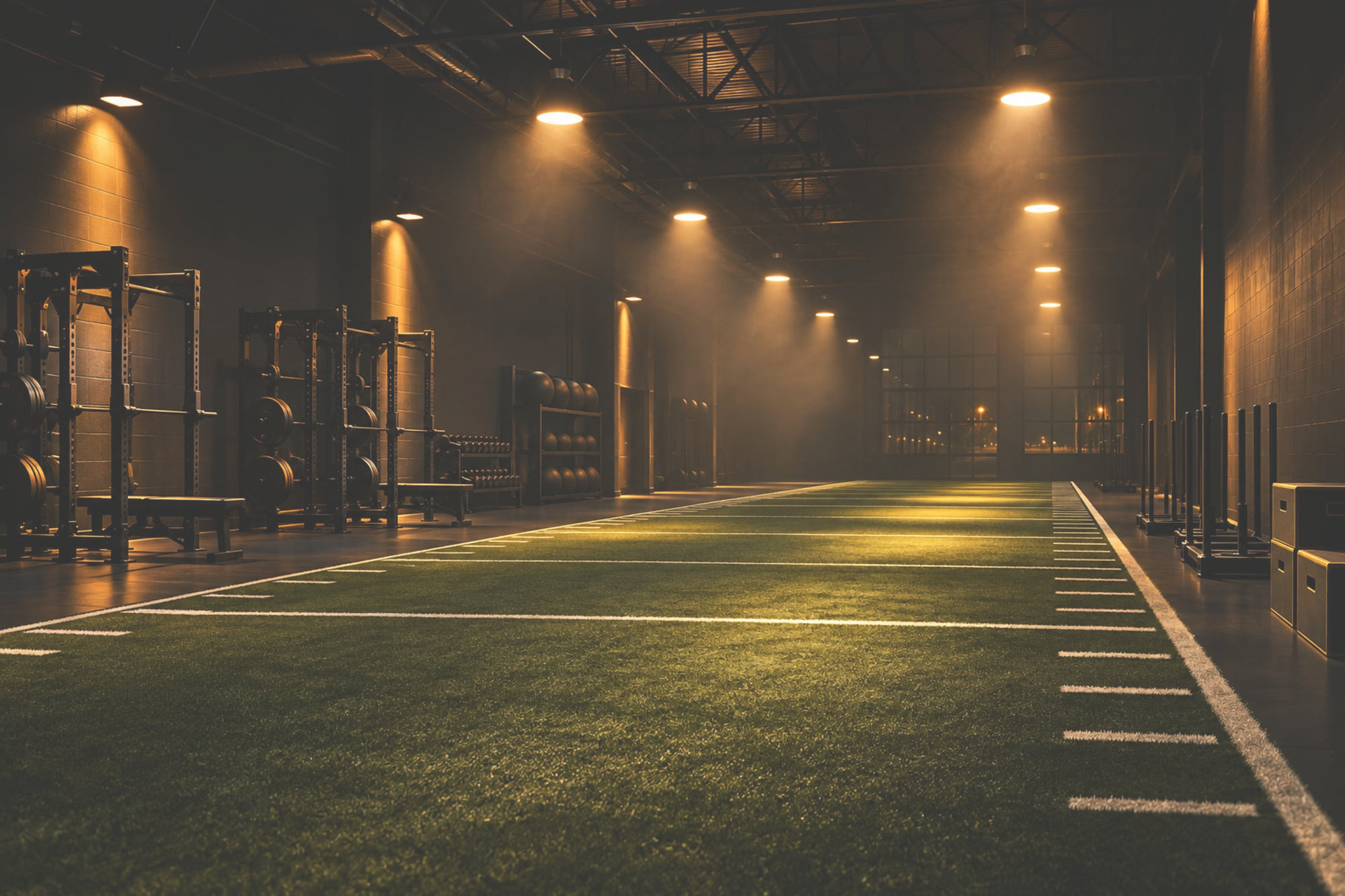
Illustrative image: an empty indoor training facility with turf and overhead lighting.

Athletes · Development

The long game
of development.

Athletes are not finished products. Development is a progression — built stage by stage, with the athlete's age, training history, and sport shaping the work.
01

Pathway

Stages, not shortcuts

Each stage has a different priority. The goal is not to rush an athlete into advanced work — it is to build the qualities that make advanced work productive later.
FoundationYouth athletes

Movement first

Coordination, body control, and confidence. Sessions introduce sprinting, jumping, and basic strength positions with an emphasis on play, safety, and technique.

  • Movement literacy
  • Body control
  • Speed fundamentals
  • Confidence
DevelopmentMiddle school

Building capacity

Structured speed and strength work with a growing emphasis on consistency. Athletes learn how to warm up, train, and recover with intent.

  • Sprint mechanics
  • Strength positions
  • Work capacity
  • Training habits
PerformanceHigh school

Competing at speed

Programming aligned to the competitive season, with measurable speed, power, and strength targets. Emphasis on resilience and repeatable performance.

  • Acceleration
  • Power development
  • Strength
  • Season management
Next levelCollege preparation

Preparing for the jump

Physical preparation for the demands of collegiate sport, including training density, recovery, and the standards athletes will meet at the next level.

  • Training density
  • Physical standards
  • Recovery
  • Competitive readiness

What athletes learn

Habits travel
further than talent.

How to prepare

A warm-up is not a formality. Athletes learn a repeatable preparation routine they can use in any setting.

How to train

Intent, tempo, rest, and technique are coached explicitly. Athletes understand what quality work looks like.

How to recover

Sleep, nutrition basics, and load management are discussed as part of performance — not as an afterthought.

How to compete

Training includes moments of pressure and measurement so athletes practise performing, not just exercising.

Guardian-led for minors

Registration for athletes under 18 is designed to be completed with a parent or legal guardian. Guardian consent, medical disclosure, and waiver acknowledgment are part of the registration process. Sensitive submissions are not enabled until a secure, approved record-keeping workflow is in place.

Athlete Development | Young & Elevated Sports Performance