
Athlete mid-lift with a loaded trap bar in a dark performance gym

Training · Programs

Built for the demands of sport.

Eight training disciplines, programmed together around one athlete. Each quality is developed with intent — and progressed only when technique earns it.
01

Disciplines

What we train

Descriptions below explain the training emphasis. They are not promises of a specific result, and training is not medical treatment or physical therapy.
01

Speed & Acceleration

Sprint mechanics, first-step quickness, and acceleration patterns developed through structured, repeatable drills rather than random conditioning.

Focus

  • Sprint mechanics
  • First-step quickness
  • Acceleration mechanics
  • Top-speed exposure

Why it matters

Athletes learn how to produce force into the ground efficiently and how to repeat quality efforts with intent.
02

Explosive Power

Jumping, throwing, and loaded explosive work designed to improve the rate at which an athlete can produce force.

Focus

  • Rate of force development
  • Jump progressions
  • Med-ball power
  • Landing mechanics

Why it matters

Power work is progressed deliberately, with technique quality treated as the gate for adding load or complexity.

03

Agility & Change of Direction

Deceleration, re-acceleration, and cutting mechanics that reflect the chaotic demands of field and court sport.

Focus

  • Deceleration control
  • Cutting mechanics
  • Reactive agility
  • Body control

Why it matters

Athletes practice changing direction under control, with an emphasis on positions they can repeat at speed.

04

Strength Development

Progressive resistance training built around fundamental movement patterns and long-term athletic development.

Focus

  • Squat pattern
  • Hinge pattern
  • Upper-body pushing & pulling
  • Core stability

Why it matters

Strength is built as a foundation for sport performance — not as an end in itself — with technique prioritized over load.

05

Injury Prevention / Risk Reduction

Targeted preparation of commonly undertrained areas, including hamstrings, adductors, calves, and trunk control.

Focus

  • Hamstring preparation
  • Adductor strength
  • Ankle & calf capacity
  • Trunk control

Why it matters

Risk-reduction work is a training emphasis, not a medical service or a guarantee against injury.

06

Sport-Specific Conditioning

Work-capacity development shaped around the intermittent, high-intensity demands of competitive sport.

Focus

  • Repeat-effort capacity
  • Interval design
  • Position demands
  • Recovery awareness

Why it matters

Conditioning is programmed around the athlete's sport and season rather than a single universal workout.

07

Vertical Jump Enhancement

A combined approach to jump performance: force production, elastic qualities, and landing and takeoff mechanics.

Focus

  • Approach mechanics
  • Takeoff positions
  • Elastic strength
  • Measured jump testing

Why it matters

Jump work is measured with objective tools so athletes can see change over time rather than rely on feel alone.

08

Mobility & Flexibility

Joint-specific range-of-motion work that supports positions an athlete actually needs in their sport.

Focus

  • Hip range
  • Ankle range
  • Thoracic position
  • Dynamic warm-up design

Why it matters

Mobility is trained as a usable quality — range the athlete can control — not as passive stretching alone.

02

Formats

How athletes train

Service formats are configurable. Pricing, schedules, and locations are confirmed directly on inquiry — they are not published here.

Private Training

One-on-one coaching built around an individual athlete's assessment, goals, and season.

Availability, pricing, and location confirmed on inquiry.

Small-Group Training

Small cohorts that keep individual attention while adding a competitive training environment.

Group sizes, pricing, and schedule confirmed on inquiry.

Team Training

Programmed sessions for a school or club team, coordinated with the coaching staff.

Scope and scheduling confirmed on inquiry.

Sports Camps

Short-format performance camps focused on speed, power, and movement quality.

Camp dates and formats announced when confirmed.

School Partnerships

Structured performance support delivered in partnership with a school or athletic program.

Subject to a separate school services agreement.

Athlete Performance Assessments

A measured baseline across speed, jump, and movement qualities to guide programming.

Assessment protocol and scheduling confirmed on inquiry.

Training principles

Assess before prescribing

Programming starts from what an athlete can currently do, not from a template. Baseline testing informs the plan.

Technique earns load

Position and control come first. Load, speed, and complexity are added when an athlete has earned them.

Measure what matters

Speed, jump, and output data are tracked so progress is a recorded trend rather than a feeling.

Build the whole athlete

Habits, recovery, confidence, and communication are coached alongside physical qualities.

Important limitations

Athletic training involves inherent risk. Young & Elevated Sports Performance does not guarantee improvement, injury prevention, scholarship offers, recruiting outcomes, or professional contracts.

Training is not medical treatment, physical therapy, or rehabilitation. Athletes with injuries or medical restrictions should consult a qualified healthcare provider.

Pricing & scheduling

No prices or session schedules are published at this stage. Availability, pricing, and location are confirmed on inquiry so that each athlete receives accurate information.

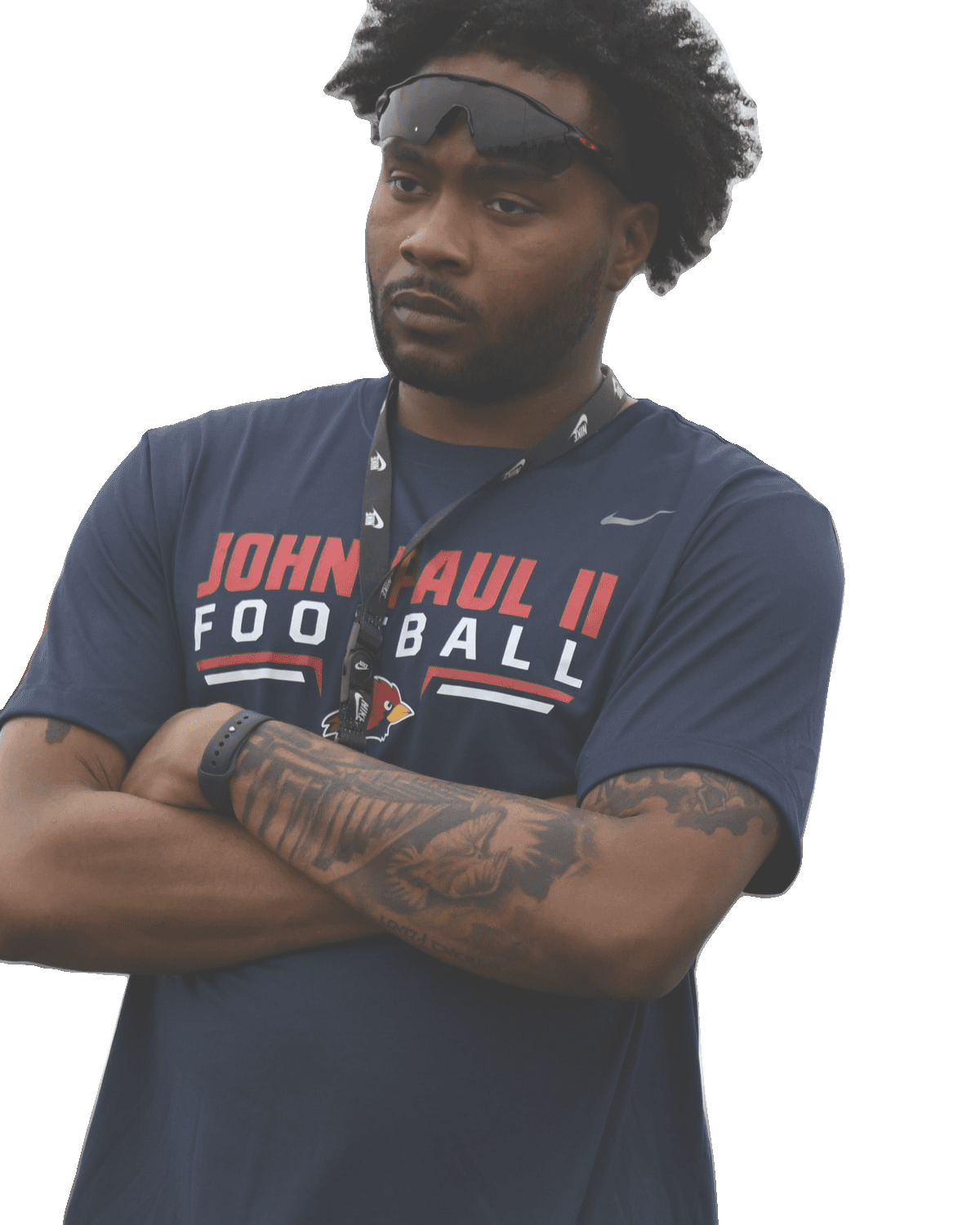
Coach Young, cut out against a transparent background

Who coaches the work

Every session is coached by Reggie Young.

Programs are written and delivered by the founder — not handed to an assistant. Reggie played Division I football at Liberty University and the University of Colorado, retired in 2023, and now coaches athletic development full time in Dallas–Fort Worth.

Training Programs | Young & Elevated Sports Performance